
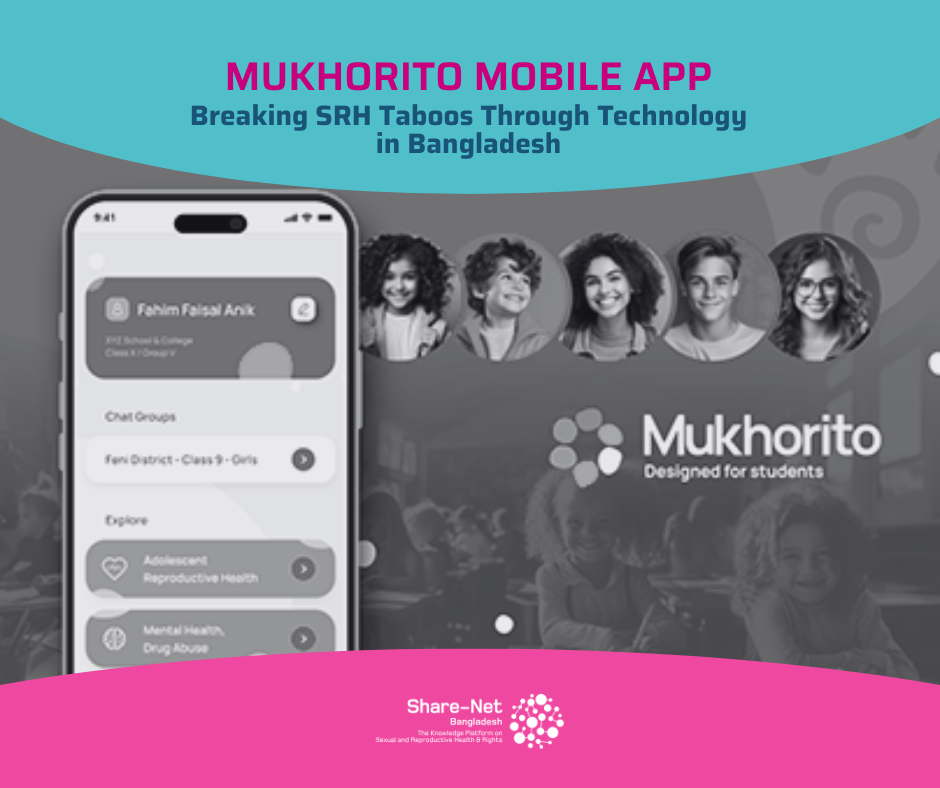
Mukhorito Mobile App: Breaking SRH Taboos Through Technology in Bangladesh
In a country where conversations around sexual and reproductive health remain sensitive, especially for adolescents, a quiet digital shift is underway. Bangladesh, home to over 36 million adolescents, continues to grapple with gaps in accurate SRH knowledge. Cultural taboos, limited school-based curricula, and restricted access to trusted information sources often leave young people navigating misinformation. But what if the answers are already in their hands?
A recent pilot study on Mukhorito, a mobile app-based SRH education tool, offers a glimpse into that possibility.
Conducted between June 2023 and March 2024 in three secondary schools in Feni, the study explored whether a mobile-based intervention could improve adolescents’ SRH knowledge and awareness. A total of 46 Class 9 students participated in this pre-post experimental research.
The app, Mukhorito, was designed to deliver interactive, gamified, and evidence-based SRH content. This approach aligns with global trends where mHealth tools are increasingly used to reach young populations in resource-constrained settings.
The findings were clear and encouraging.
“The adjusted models indicated a significant improvement… for both knowledge and awareness scores.”
Knowledge scores increased by 1.2 units, while awareness scores rose by 1.0 units, both statistically significant. In simple terms, students who used the app demonstrated better understanding and awareness of SRH topics compared to their baseline levels.
Despite high mobile phone penetration among Bangladeshi youth, SRH-focused digital interventions remain limited. This study highlights a critical opportunity.
Mobile apps like Mukhorito can bypass traditional barriers such as social stigma, lack of trained educators, and discomfort in classroom discussions. Adolescents can learn privately, at their own pace, and engage with content that feels relevant and accessible.
Globally, UNICEF reports that over 70 percent of young people in low- and middle-income countries now have access to mobile devices. In Bangladesh, this digital familiarity creates fertile ground for scaling such interventions.
However, the study also raises important questions. With only 46 participants and a non-randomised design, the findings, while promising, remain preliminary. Scaling this model would require larger, more diverse samples and integration with national education and health systems.
The real innovation lies not just in the technology but in its delivery style. Gamification, interactive modules, and youth-friendly design appear to enhance engagement. This suggests that how SRH information is presented may be just as important as the content itself.
Yet, digital divides still persist. Not all adolescents have equal access to smartphones or a stable internet. Gender disparities in device ownership may further limit reach among girls, who are often the most in need of SRH information.
The Mukhorito pilot signals a positive direction for SRHR programming in Bangladesh. It shows that adolescents are not only willing but ready to engage with digital health education when it is designed with them in mind.
But technology alone cannot solve systemic gaps. To have real impact, such tools must be integrated into broader policies, supported by educators, and adapted for inclusivity.
As Bangladesh continues to push toward improved adolescent health outcomes, one thing is clear. The future of SRH education may well be digital, but its success will depend on how thoughtfully it is implemented.